

Jun 17, 2026
I had the great pleasure of attending Tour the Design Trends during NeoCon and Design Days this year, hosted by restaurant development +design with my colleague Colleen Bernhoft. It’s always a highlight with no shortage of great food and drinks, but this year felt especially insightful.
We had the opportunity to tour five notable new restaurants in the city of Chicago over the course of six hours. There’s a shift in perspective that happens when you see restaurant design in quick succession like this. Moving from space to space in a single day, I started to notice patterns I wouldn’t pick up if I were just to go out to dinner and more importantly, it gave me a clearer sense of the intent behind design decisions that at first glance might just read as “vibe.”
What stayed with me wasn’t about how much any one space was trying to do. It was how clear each one felt. Every project had a point of view, and you could see it carried through in a consistent way.
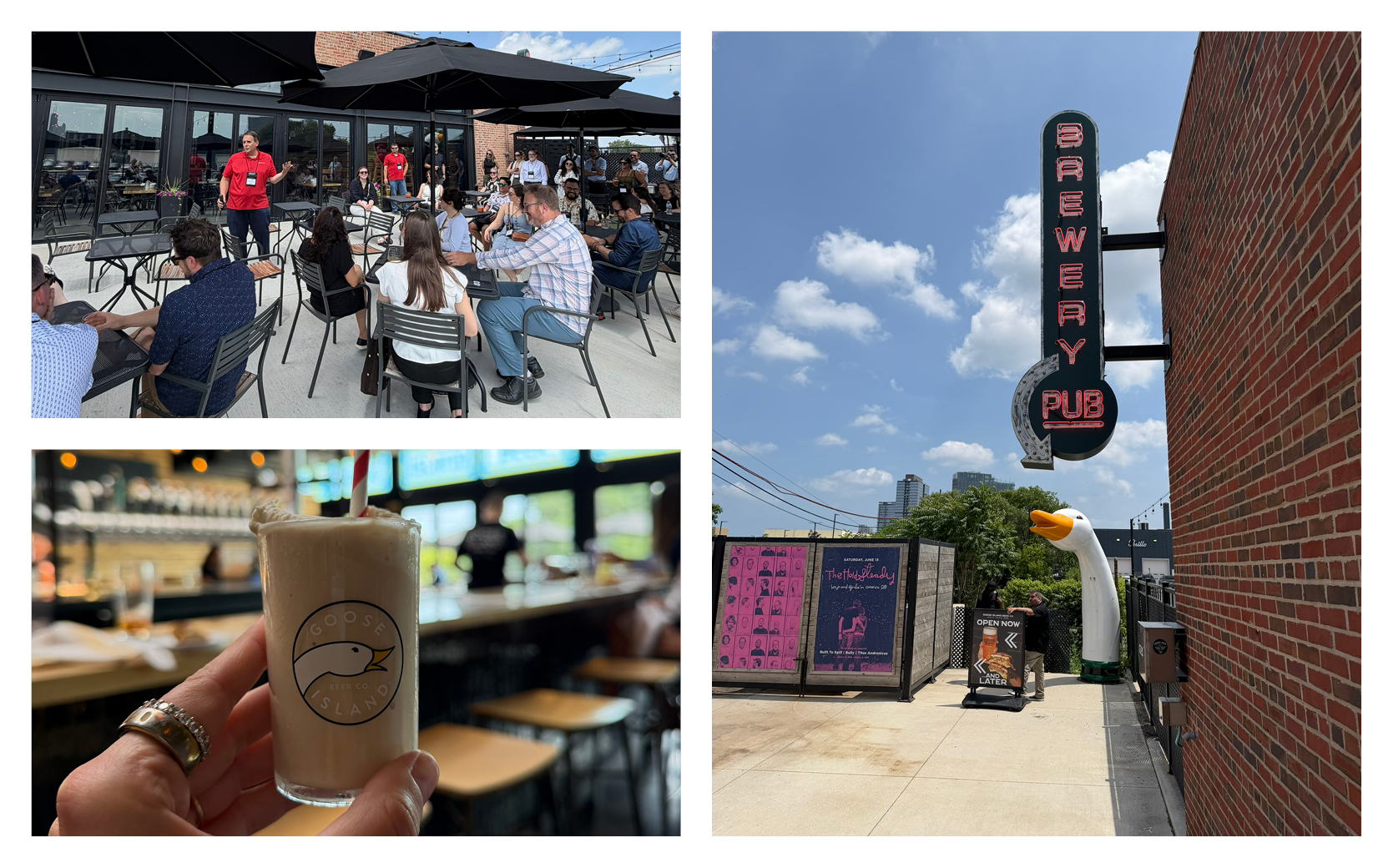
The thing I loved about starting our tour here, is that you feel this restaurant before you even walk in. The Salt Shed has always been part of Chicago’s visual memory, especially driving in off the Kennedy, that Morton Salt girl signaling you were almost downtown and it was going to be a great day in the city. That history still carries through in the space today.
The pub itself, designed by AltusWorks, leans into that history. As an adaptive reuse project with landmark status, the team resisted overworking or over-modernizing the space. The structure remains legible, the scale is preserved and the industrial character continues to define the experience.
What stood out to me was how present the brewing is within the space. It’s not treated as back-of-house or hidden from view, but instead positioned as a central element of the experience. That decision feels straight forward, but it reinforces a level of authenticity that branding alone cannot achieve.
Food highlight: Bourbon County Stout Shake
Our next stop highlighted how different experiences can be layered within a single address.
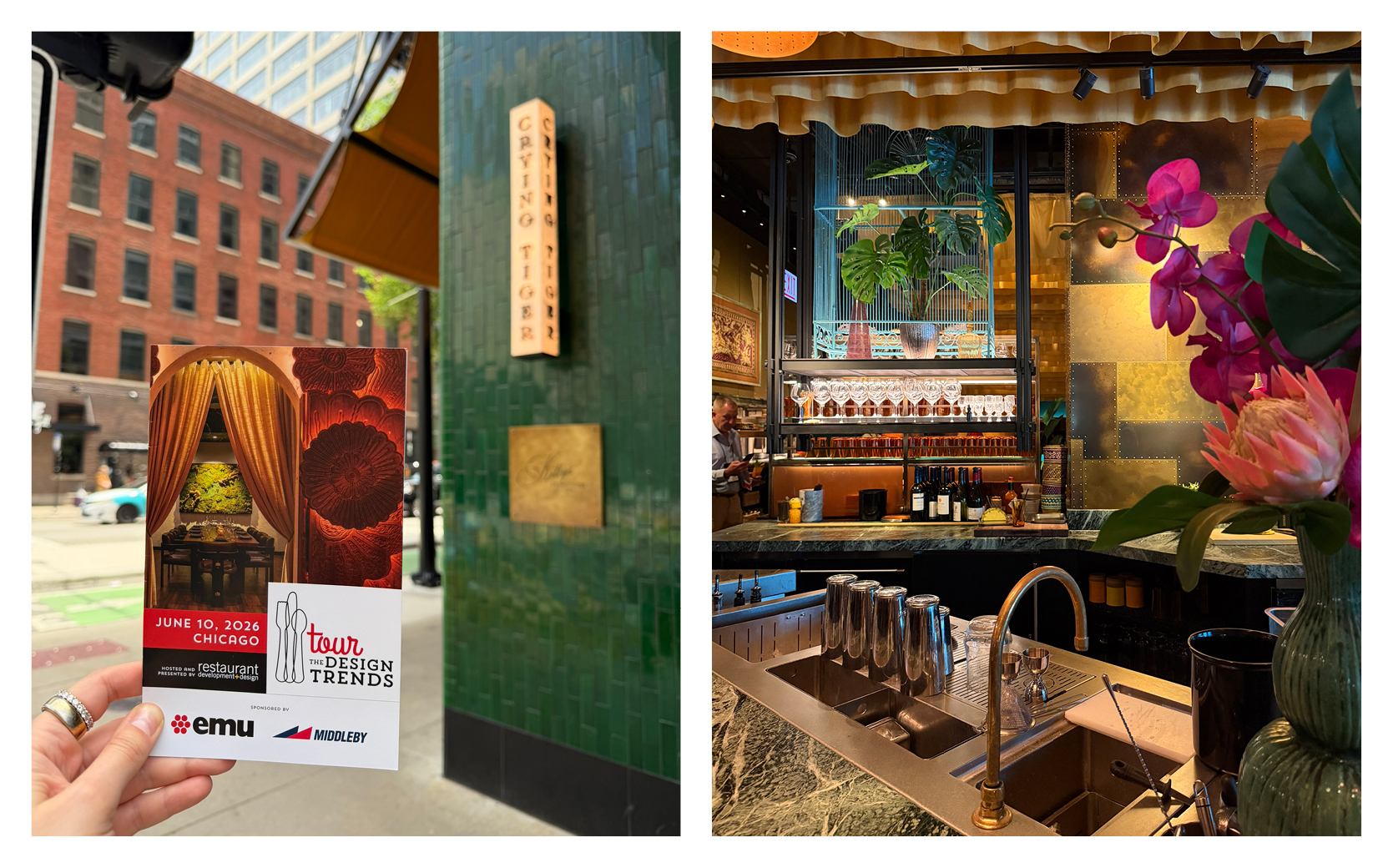
Crying Tiger, designed by David Collins Studio with Lettuce Entertain You, draws from Southeast Asia while still feeling grounded in Chicago. The materials carry richness and texture, but the space never feels themed or overdone.
One detail that stood out was the bar. Designed by BehindBars from Sweden, it is completely flat, with no separation between the guest and the bartender. That decision subtly shifts the interaction, making it feel more direct and approachable, and removes the typical barrier that can make service feel transactional. Instead, it encourages conversation, creates a more personal connection, and allows guests to feel more engaged in the mixology experience as it unfolds.
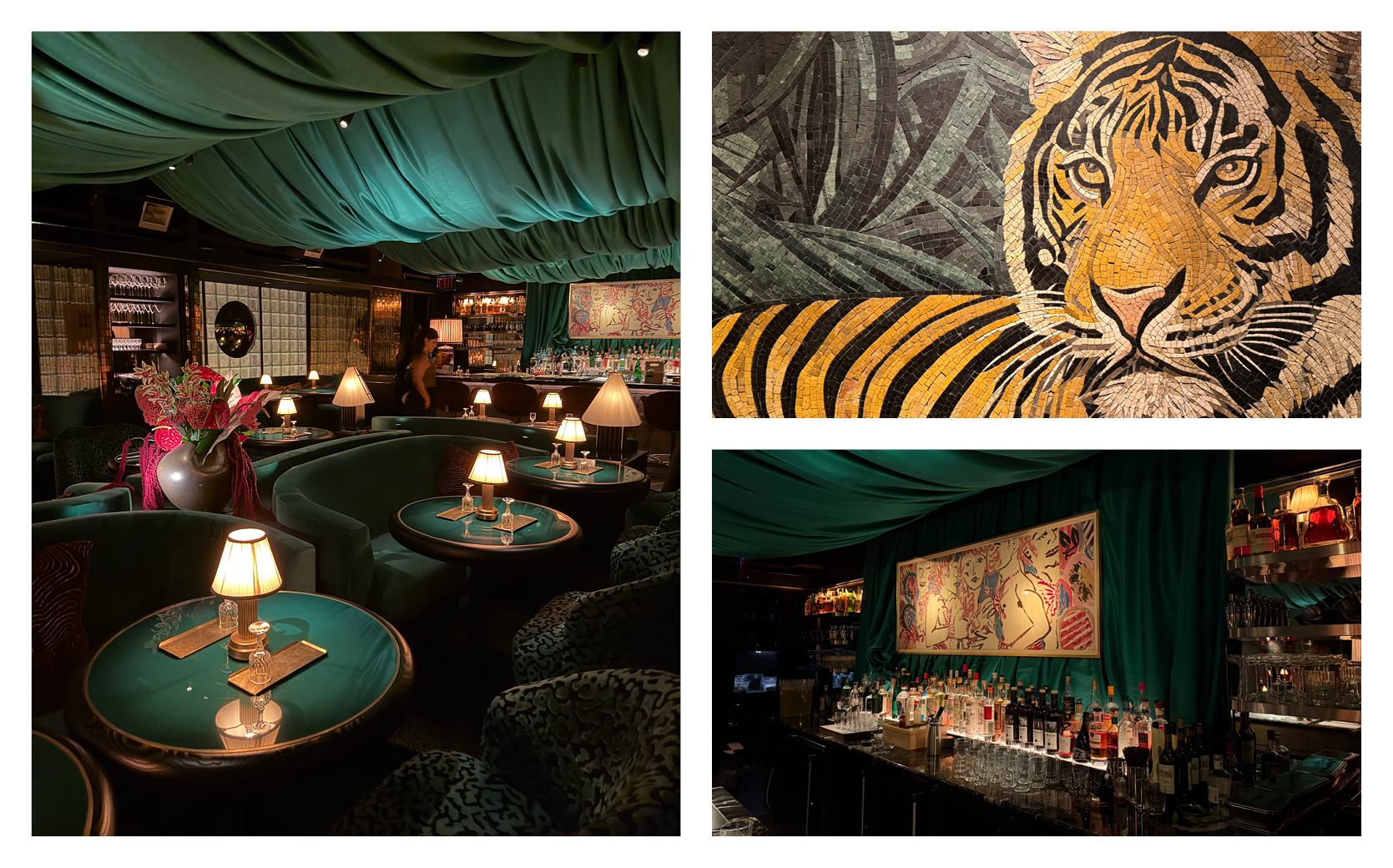
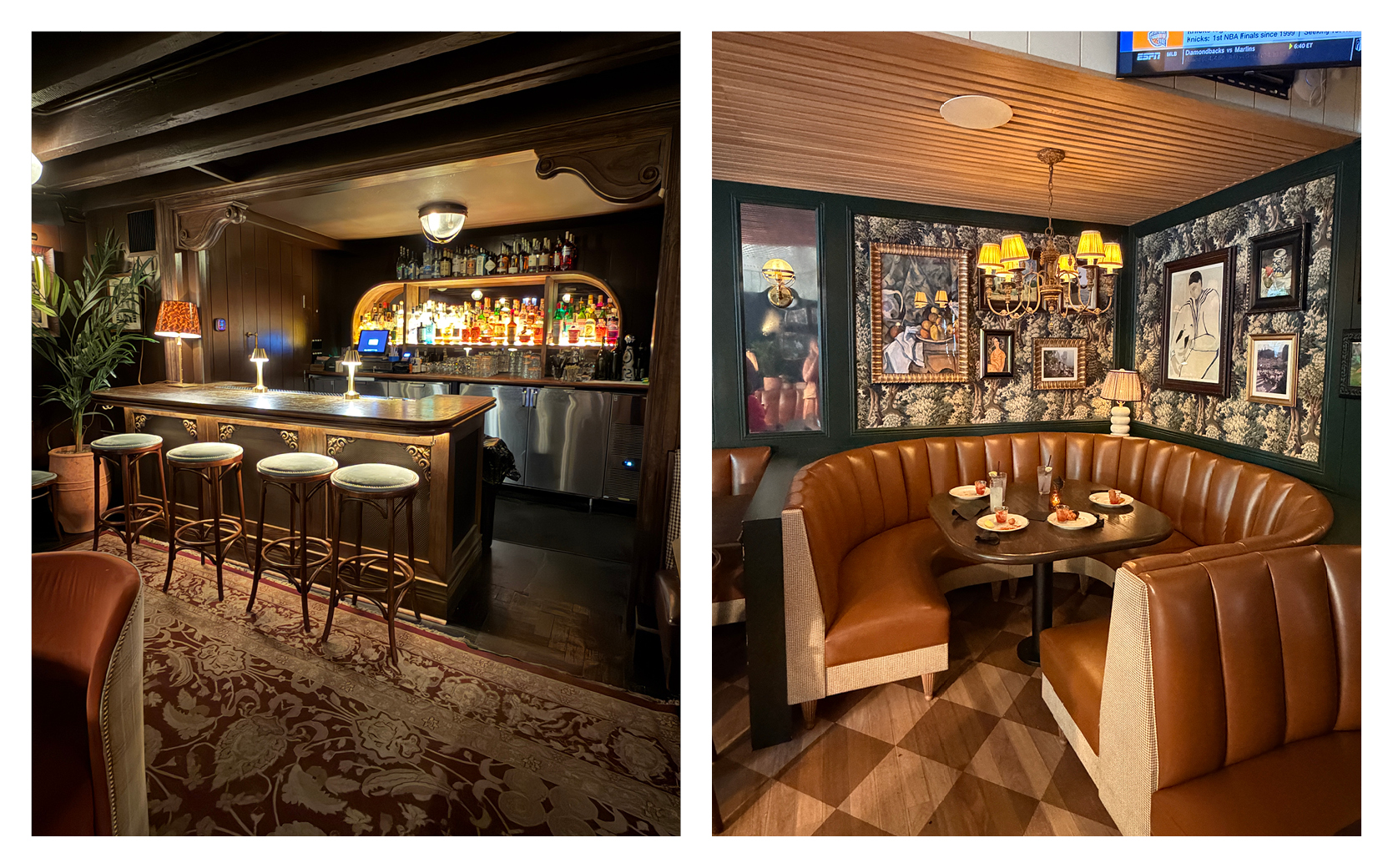
Kitty’s Cosmopolitan Club, the downstairs speakeasy is distinct from the moment you step into it. The space leans into a more intimate, lounge-driven environment, with velvet seating, layered textures, and a deep green palette that sets a strong but controlled tone.
What works well is how intentional the scale feels. The room is designed to hold a relatively small number of guests, which allows the experience to feel more personal from the start. The seating is lower and more relaxed, encouraging you to settle in rather than move through quickly, and the bar anchors the room as the central point of interaction.
And then there’s the unexpected moment that everyone ends up talking about.
The bathrooms.
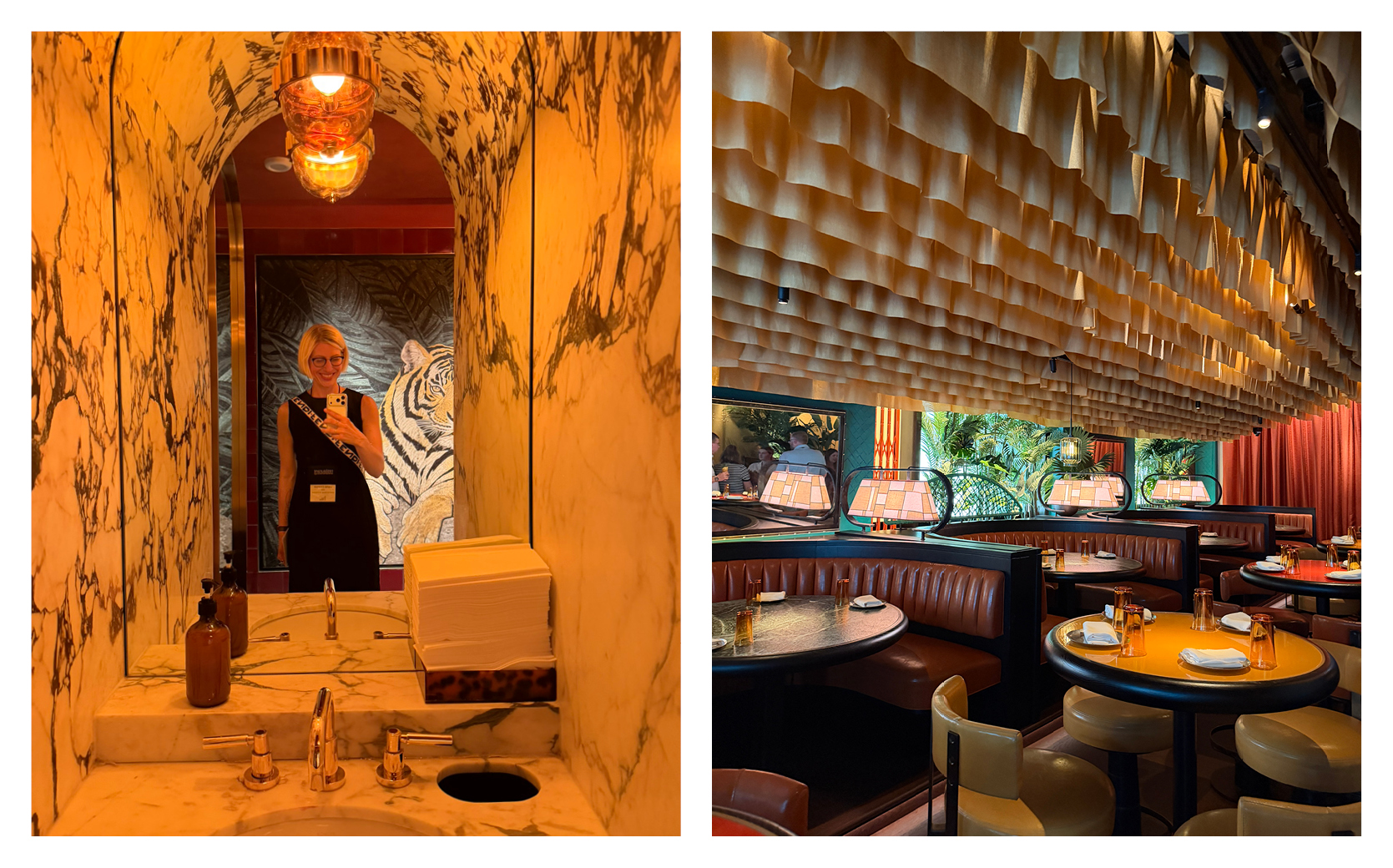
The design team carries the same level of detail and intent as the rest of the restaurant, but they take it a step further. An 8‑footmosaic tiger mural fills the space, creating a backdrop that feels both immersive and slightly unexpected. The lighting stays moody, the materials remain rich (look at all that marble), and the overall atmosphere doesn’t drop off the way it often does in secondary spaces. It is clearly designed as part of the experience, not an afterthought.
At this point, it almost goes without saying: did you even go to Crying Tiger if you didn’t take a photo in the bathroom?
Food highlight: Prawn toast youtiao with herb nam jim
Our next stop was Zarella Pizzeria & Taverna.
Zarella comes from Boka Restaurant Group, with chef partners Chris Pandel and Lee Wolen, and the design was developed in collaboration with Anna Filatov. It sits firmly in that space between a Chicago tavern pizza joint and a more traditional Italian restaurant, which is a balance that could easily tilt too far in either direction
The main dining room sets the tone. Mahogany millwork, a central bar, and a layout that feels familiar if you’ve spent time in Chicago. It reads as a neighborhood place, but the detailing is more precise than that. The proportions, the lighting, even how the room is organized all feel more intentional than a typical tavern setting.
Where it gets interesting is in how that idea carries through the entire experience. The menu, the design, and the overall tone are aligned. Tavern-style pizza is having a real moment in Chicago right now (see ya later deep dish!), and this leans into that without overplaying it. It feels like it belongs here.
Going downstairs, you first pass through what feels like atypical Chicago restaurant basement, restrooms, prep space, nothing that suggests there’s anything more beyond it.
That’s what makes the reveal unexpected.
The taverna is tucked behind what reads as storage, and unless you know it’s there, you’re not looking for a second space. Once you step inside, the atmosphere shifts. It’s darker, more relaxed, and more focused on drinks and smaller groups, a quieter counterpoint to what’s happening upstairs.
That contrast between the two spaces is what gives the project more range. You have the energy and familiarity of the main dining room, and then a second setting that allows the evening to slow down and take on a different tone.
Food highlight: Spicy vodka tavern-style pizza
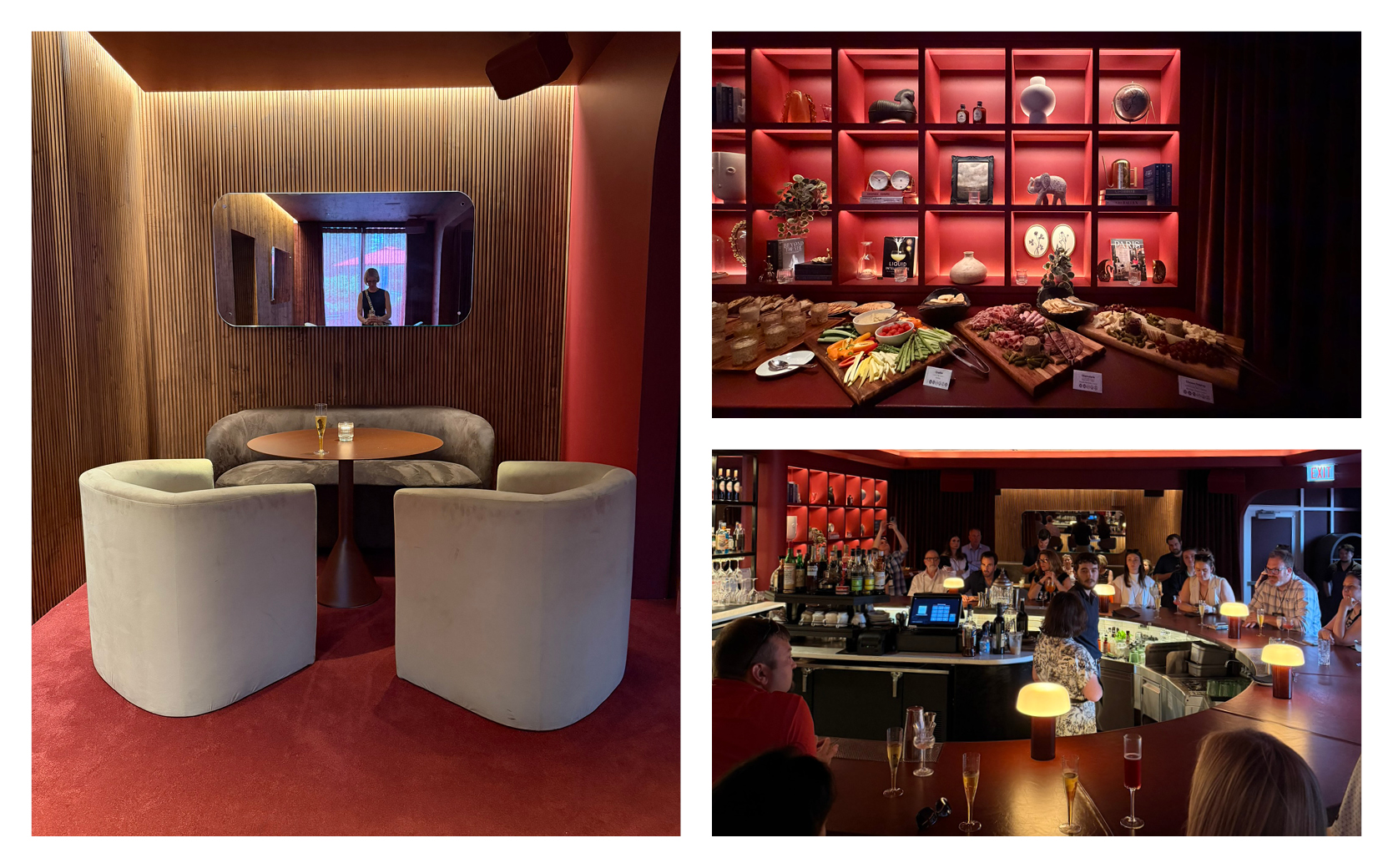
Cache 310 is a bar that you have to hunt for. It's buried in the base of BMO Tower near Union Station, and it gives you nothing on the way in. If I wasn’t with the tour group, I might have genuinely wondered if I had the wrong door! Once you're inside, you realize was probably the point.
The room is small with seating for about forty people. Saturated in deep red and burgundy velvet curtains, it's pulling from 1920s Paris and feels more like a series of smaller rooms nested inside one another.
The design decision that I felt immediately was the play with scale. While the half circle bar is massive, the soft seating is intimate, giving a clear alternative to sitting at the bar. The seating clusters and tables close together with light kept low. This is not a place you pass through. It's a place you land in and stay for a quiet drink.
It’s also a reminder that not every space needs to announce itself to be successful. Caché 310 relies on restraint. It draws you in, holds your attention, and lets the experience build over time rather than asking for it all at once. In a city that often leans toward bigger, louder moments, this kind of control stands out.
Cocktail highlight: Popcorn au beurre
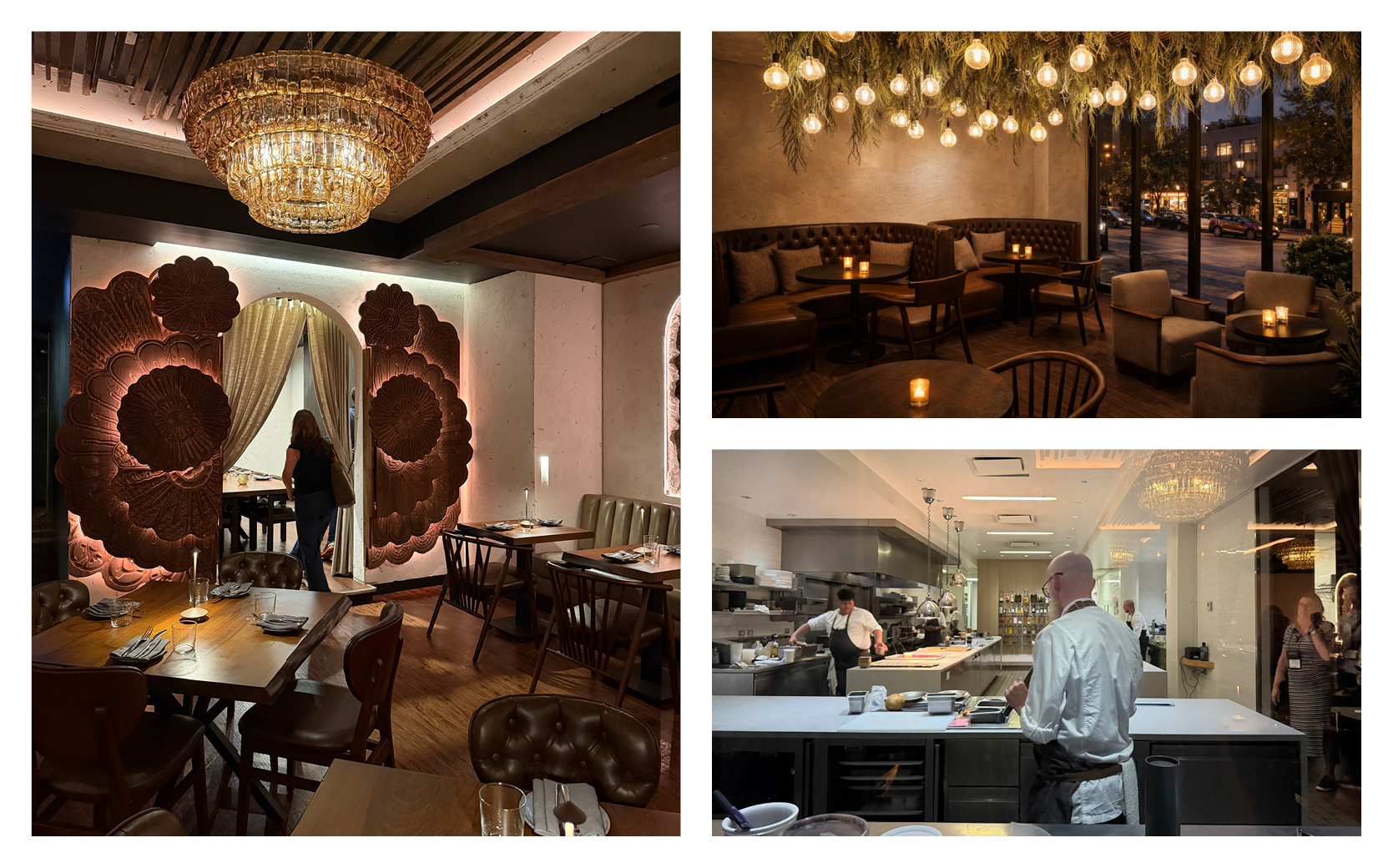
Taking over the former Grace space comes with a certain weight. It’s one of the most recognized dining rooms in the city, and there’s an expectation that comes with that.
Susu doesn’t try to replicate what was there before. The team took a different approach, starting with the programming of the space itself. The layout moves from a more active bar and lounge overlooking Randolph Street into a deeper, more focused dining room, creating a progression rather than a single moment. The room has been reworked with layered materials, including hand-carved wood details and mural work, which brings warmth to a space that previously read more formal.
What works is that the design, the menu, and the overall positioning are aligned. It reads as a space that has been rethought for how people want to experience dining now, rather than trying to carry forward what it used to be.
Food highlight: Kafta
Seeing these projects back-to-back, what becomes clear is not a single trend but a shift in how dining spaces are being resolved.
There’s a consistent move toward removing friction between the guest and the experience. You see it in the flat bars, in how kitchens are exposed but still controlled, and in how service and design are working more closely together. The physical and operational layers are starting to align in a way that feels more intentional.
Circulation is also being handled differently. Movement through the space is no longer an afterthought. It’s designed as part of the experience itself. Whether it’s a hidden taverna, a lower-level lounge, or a compressed entry that opens into something unexpected, each project is thinking about sequence and discovery in a more deliberate way.
Taken together, it reflects a broader shift. Restaurant design is less about creating a singular visual moment and more about building a cohesive experience over time. How you arrive, where you choose to sit, how the room scales around you, and how long you stay are all being considered with more precision.
Chicago feels especially strong in this right now. Not because these spaces look alike, but because they are being approached with a similar level of discipline. Thank you to the whole team at restaurant design +development magazine for a thoughtful, inspiring and delicious tour! I can’t wait until next year.
Lauren Chipman is the Chief Executive Officer of Chipman Design Architecture, where she provides creative leadership for one of the nation’s most established commercial architecture and design firms. A true multi‑disciplinary designer and former performing artist, Lauren brings an unconventional and forward‑thinking perspective to architecture, branding, and the built environment.
Before joining Chipman Design Architecture, Lauren built a successful career as a professional stringed instrumentalist, recording for television, film, and top Billboard artists. That background deeply informs her approach to design leadership today. Her ability to blend creativity with structure allows her to guide complex hospitality, retail, and restaurant projects with both vision and precision.
As a third‑generation leader of a family‑owned firm, Lauren is proud to carry on Chipman Design Architecture’s legacy while continuously pushing it forward. Under her leadership, the firm supports national and global brands including Chick‑fil‑A, Jeni’s Splendid Ice Creams, Ulta Beauty, and Whole Foods Market. Lauren’s entrepreneurial mindset extends beyond traditional architectural practice, emphasizing innovation, adaptability, and long‑term relevance.
Lauren actively integrates emerging technology into the conceptual design process and champions the recruitment of multi‑hyphenate talent with diverse professional backgrounds. By leveraging her experience as an industry outsider, she fosters a culture that values curiosity, inclusivity, and cross‑disciplinary collaboration. The result is a design practice that is both deeply experienced and future‑focused.


