

Feb 17, 2026
There are two momentous days in my life when I felt complete, unbridled joy: the day I married my amazing husband and the day I passed the final Architectural Registration Exam (ARE). As one of the 6% of candidates who passed every division on the first try, I am often asked, “How did you do it?”
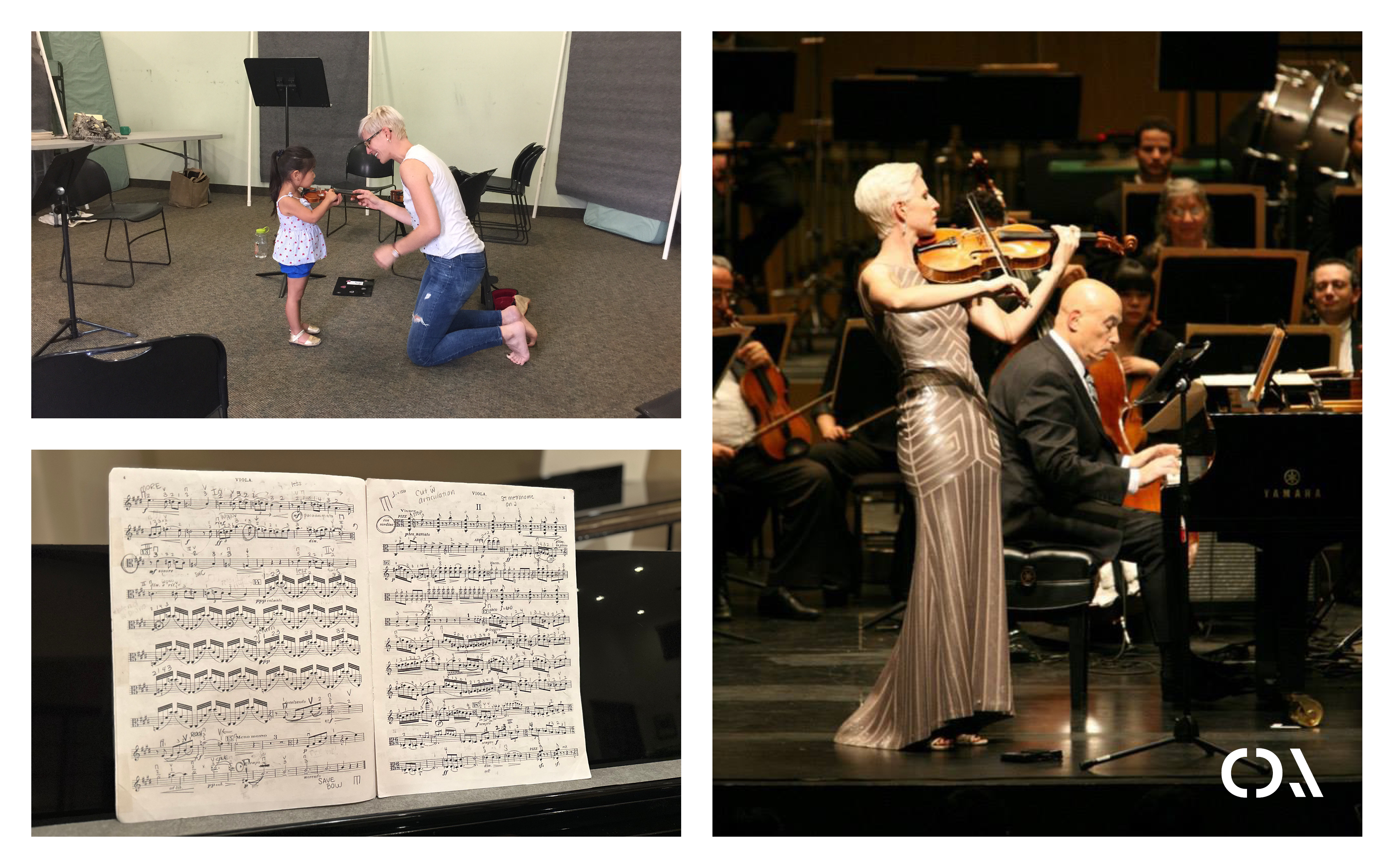
I truly believe my former life as a classical musician gave me the tools to meet this milestone in every architectural designer’s career. Drilling exam content was not all that different from spending 4–6 hours a day in the practice room. Here are my four principles for acing the AREs like a pro.
I used to tell my private violin, viola, and piano students, “No… you don’t have to practice every day. Just the days you eat! 😉 ”I approached studying for the ARE the same way.
While I took PcM, PjM, and CE sequentially with breaks in between, I committed to studying for the final three exams simultaneously because of the overlap in material and I sat for all three within a 10-dayspan.
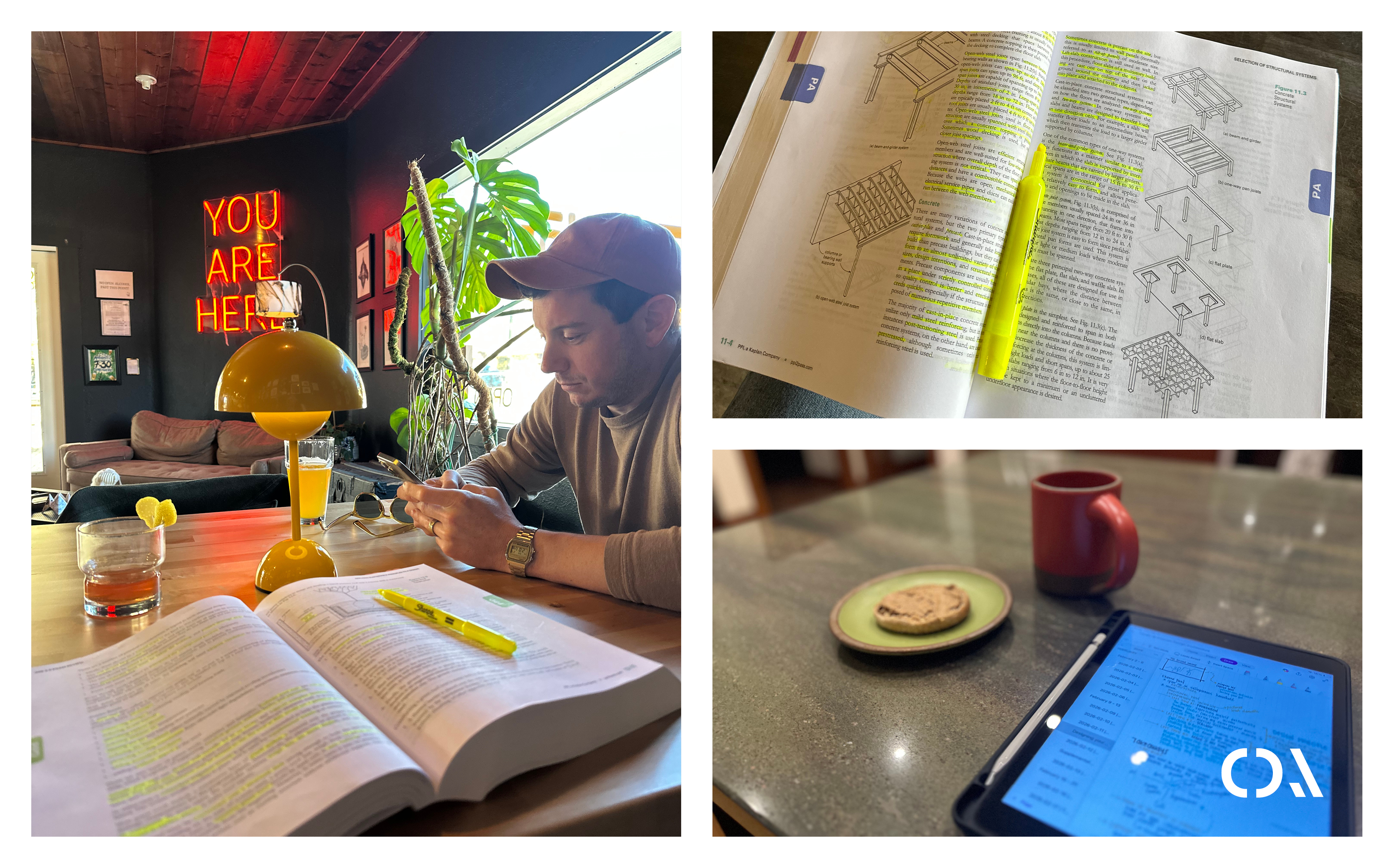
In the two months leading up to that testing sprint, my study schedule was completely inflexible. It simply became part of my everyday routine. On weekdays, I studied from 5:30–6:30am and 7:30–9:00pm. Weekends required a minimum of five hours a day. I took my books everywhere: to hair appointments, to bars and restaurants, on airplanes, literally anywhere I could squeeze in more time.
When you look at the cumulative required reading for these six exams, you’ll notice it totals more than 37,000 pages. Even if you could read all of it, there’s no way you’d retain every detail. So how do you make the most of your precious study time? You attack the material from multiple angles.
As a musician, I could never rely solely on muscle memory to perform a 30-minute piece from memory. I had to understand chord progressions, note patterns, shifts, fingering, and overall musical structure from an intellectual standpoint.
The same is true for the ARE.
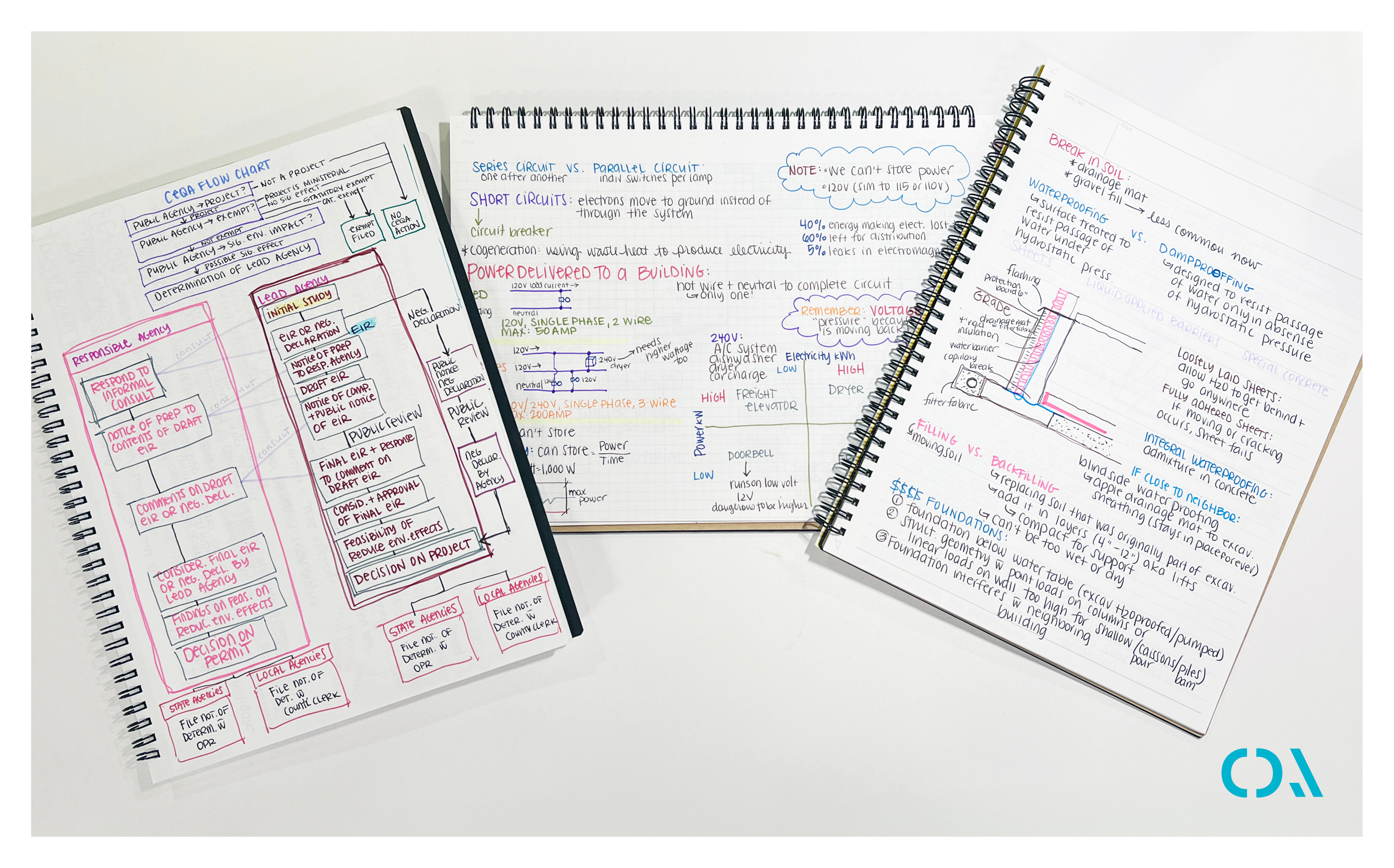
For active studying, I always took handwritten notes. Research shows that handwriting improves long-term recall and comprehension of complex concepts by 20–30% compared to typed notes, and even more compared to taking no notes at all. Writing forced me to slow down and truly process the material.
For passive learning, I looked for supplementary resources. Platforms like Black Spectacles’ YouTube channel broke down how to approach situational-based questions and allowed me to keep studying during my commute or while exercising. Passive study alone isn’t enough, but paired with active study, it reinforces concepts in a powerful way.
As a musician, I never performed a piece for the first time in front of an audience. I did dress rehearsals for friends, recorded myself and listened back and rehearsed in the actual performance space whenever possible.
I took the same approach with the ARE. The NCARB practice exams became a core part of my preparation.
Many test takers underestimate the importance of becoming comfortable with the testing platform. Let’s address it head-on: the whiteboard and calculator tools are NOT intuitive. As architectural designers, we’re used to sketching on paper, but unless you have accommodations, scratch paper isn’t allowed.
Don’t take practice exams just to answer questions correctly. Use them to refine your strategy. Practice organizing your notes on the digital whiteboard, experiment with how you’ll physically arrange windows on the screen and determine your pacing, so you not only complete the exam but have time to review flagged questions.
Unlike exams such as LEED, WELL, or the CSE, once you leave the testing room for a break, you cannot return to previously viewed questions. If you left them unanswered, you lose access to them. My recommendation? Do every thing in your power to stay in the room.
Develop a clear strategy for flagging questions and make full use of the strikeout and highlighting tools to narrow down answers and identify key information in longer prompts.
Musicians can be notoriously superstitious about performance routines; I developed my own ARE testing-day rituals to eliminate as many unknowns as possible.
I always scheduled the earliest testing appointment available (usually 9am). I woke up at 6am, made one black cup of coffee and an English muffin with almond butter for steady energy, and spent two hours reviewing my handwritten notes to reinforce high-level concepts.
I never wanted to feel rushed, so I left the house at least 30 minutes early. On the drive, I listened to a carefully curated playlist to get myself in the right headspace.
At the end of the day, whether you’re stepping onto a stage to perform a concerto or walking into a testing center to take the ARE, the goal is the same: remove as many variables as possible, stay calm under pressure, and trust that you’ve put in the work.
The ARE is not about luck. It’s about preparation, discipline, and mindset. If you treat studying like a professional commitment, engage deeply with the material, master the testing format, and create rituals that steady your nerves, you will walk into that exam room with confidence.
And when you finally see that final “LIKELY PASS” screen, I promise you, it will feel just as triumphant as a standing ovation.


